Construction debris removal in Pala, loaded and hauled in one visit
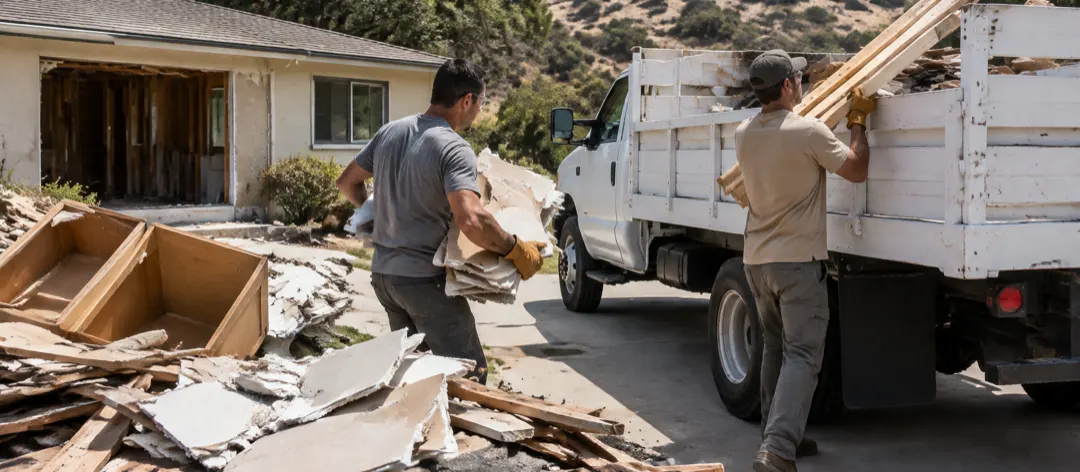
Drywall, lumber, shingles, broken concrete and flooring from your remodel or repair. Our crew loads it from wherever it sits and takes it to the right disposal or recycling site.
- Monday–Friday8 AM–6 PM
- Saturday9 AM–4 PM
- SundayClosed
Text a few photos of the pile and we can usually give a price range on the first call.
What goes in the truck
Most remodel and repair debris is fine. A few materials need a call first, and some can't go in a regular load in California.
Goes in the truck
- Drywall, plaster and lath
- Lumber, plywood, trim, decks and fencing
- Shingles, felt and flashing
- Concrete, brick, block and tile pieces
- Flooring: carpet, pad, laminate, tile
- Cabinets, counters, doors, fixtures
- Packaging, pallets and cardboard
Call first
- Drywall, textures or vinyl tile from a home built before the 1980s
- Pressure-treated wood in large amounts
- Concrete with lots of soil, or big rock
- Full tile roofs
These change how the load is handled or where it can go.
Not in our loads
- Paint, solvents, adhesives and pesticides
- Material that tested positive for asbestos
- Batteries, fuel and propane tanks
- Fluorescent tubes and electronics
Household hazardous waste goes to county and city drop-off programs (San Diego County HHW).
Seven services, from the roof down to the slab
Construction debris removal covers mixed loads. If your pile is mostly one material, its own page explains how we handle it, what it weighs and where it goes.
Construction Debris Removal
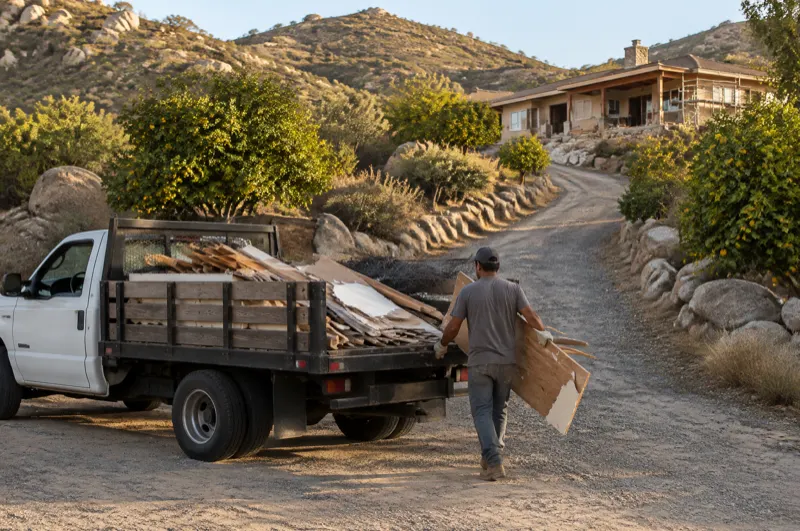
Mixed piles from a remodel, repair or build: drywall, lumber, shingles, broken concrete, cabinets and packaging, loaded by the crew and hauled in one trip.
Roofing Debris Removal
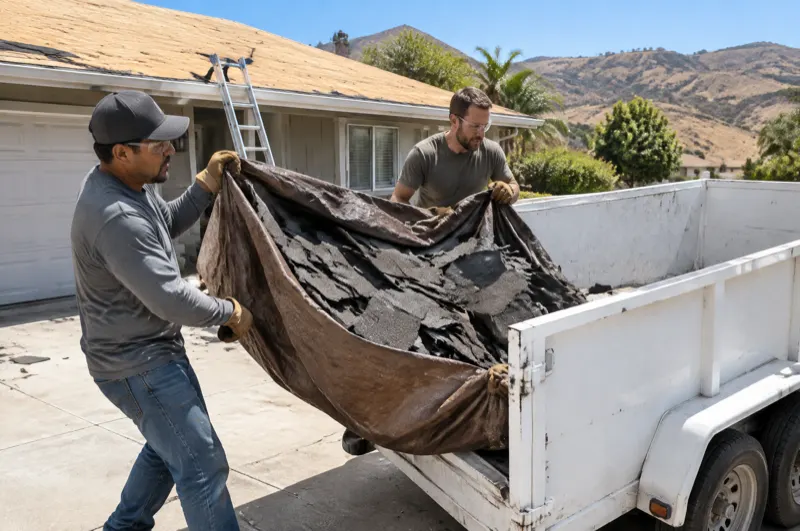
Torn-off asphalt shingles, underlayment, flashing and old sheathing hauled after a re-roof or a storm repair.

Lumber Removal
Old framing, offcuts, torn-down decks, fence boards and pallets, including pressure-treated wood kept separate for the right facility.
Drywall Removal
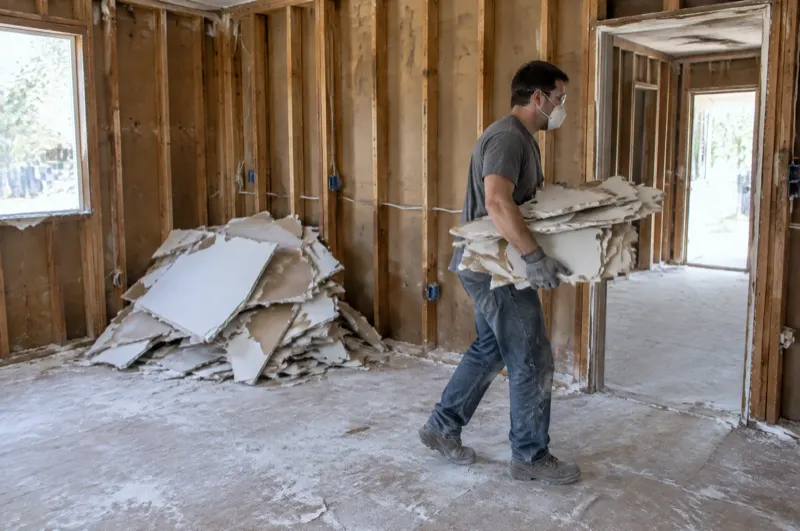
Torn-out gypsum board, new-construction scraps and bagged sanding dust carried out of the house and hauled.
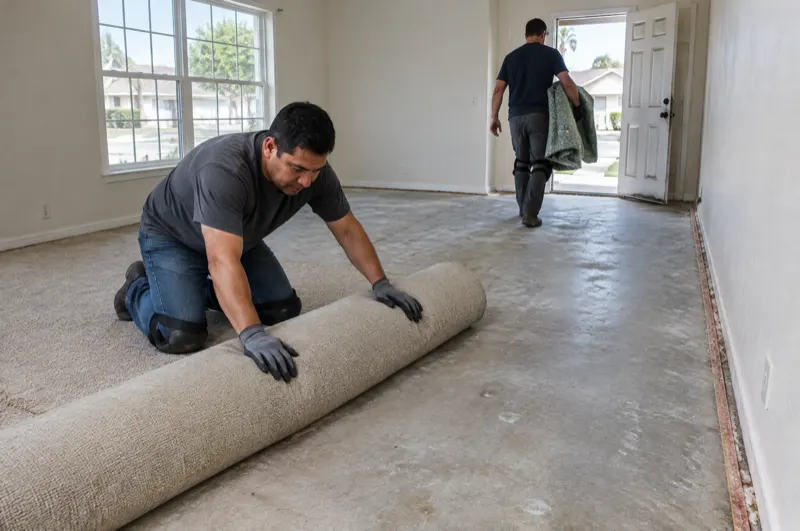
Flooring Removal
Carpet and pad, laminate, engineered wood, ceramic tile and sheet vinyl pulled up or already stacked, then hauled.
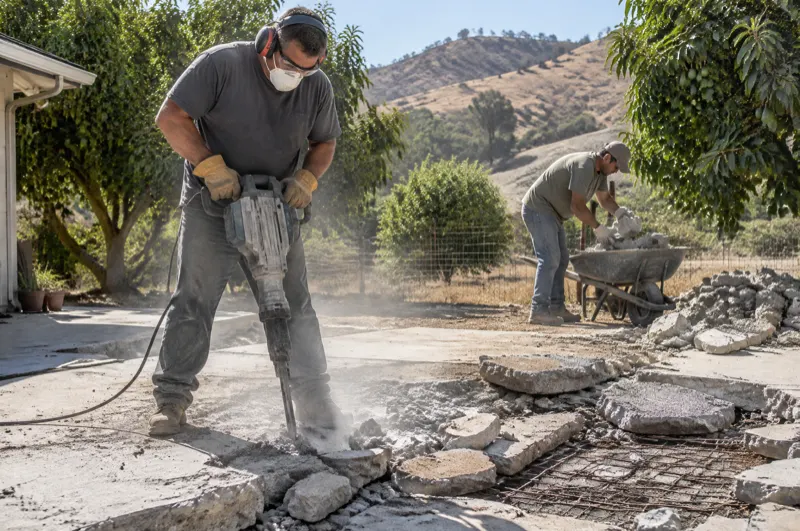
Concrete Removal
Patios, walkways, small pads and already-broken slab pieces broken into liftable chunks, loaded and taken to recycling.
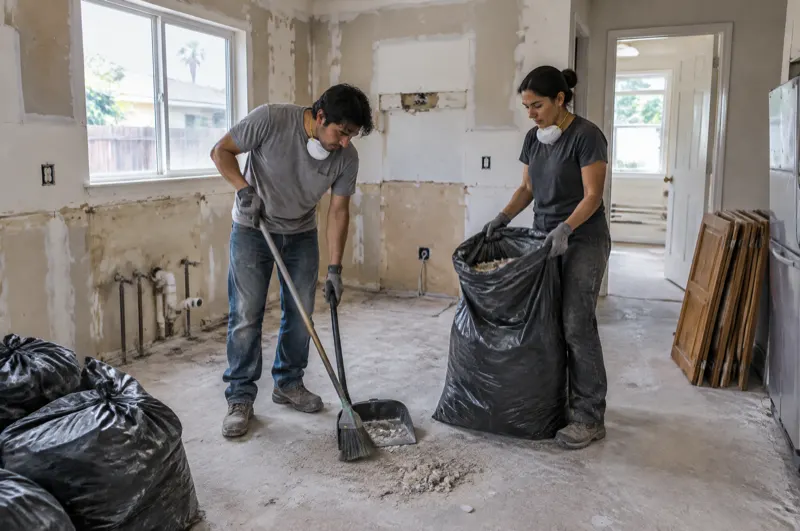
Renovation Debris Cleanup
The cleanup at the end of a remodel: bagging small debris, clearing the rooms and driveway, and hauling the last load.
How a load is priced
We don't quote a flat rate without seeing the pile, because two loads that look the same can differ by a ton. Concrete runs about 145 to 150 pounds per cubic foot; drywall and lumber weigh a fraction of that for the same space.
Photos and a few details get you a price range on the first call. The final price is confirmed on site before anything is loaded.
- How muchThe share of the truck the pile fills, from a few items to a full load.
- How heavyConcrete, tile and roofing reach weight limits before the truck is full.
- How far we carry itDriveway edge, backyard, inside, upstairs or down a steep drive.
- How loose it isSmall pieces that need bagging or shoveling take longer than bulky ones.
| Material | Unit | Weight | Source |
|---|---|---|---|
| Concrete, normal weight | per cubic foot | 145–150 lb | FHWA |
| 4-inch slab, 10 × 10 ft | whole slab | ≈ 4,800–5,000 lb | from FHWA figure |
| Three-tab shingle tear-off | per square | ≈ 200 lb | IKO |
| Laminate shingle tear-off | per square | ≈ 240 lb | IKO |
| Premium shingle tear-off | per square | ≈ 300 lb | IKO |
From your call to a clear driveway
Most jobs are one visit. You don't have to move the pile to the curb or lift anything.
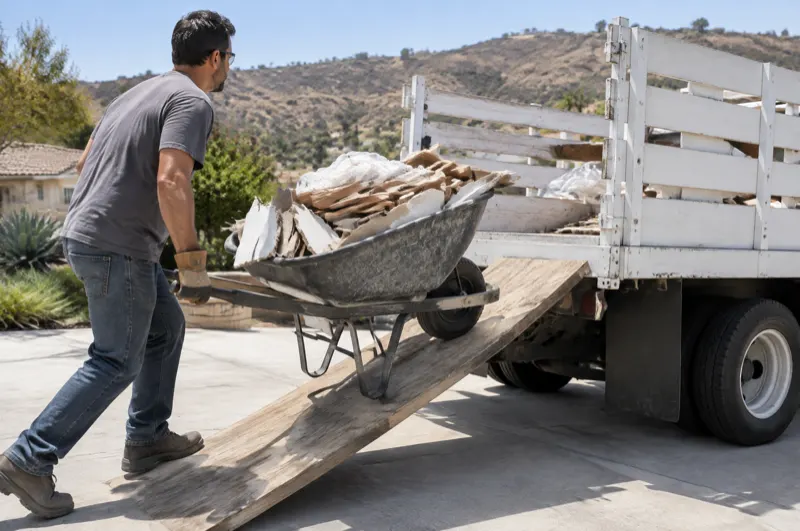
Call or text photos
Call (951) 720-3745. Photos of the pile with something for scale help us price it.
Get a price range
Based on how much there is, what it weighs and where it sits.
We load it
The crew picks up everything from where it is, inside or out, and rakes up the small pieces.
Hauled to the right place
Clean concrete and metal go to recyclers where accepted; the rest goes to permitted disposal.
Pala and the towns along SR-76 and I-15
Pala sits on State Route 76, with Pala Temecula Road running north to Temecula, about 10 miles away by straight line. Those roads shape our area: Pauma Valley and Valley Center to the east and south, Rainbow, Fallbrook and Bonsall toward I-15, and the I-15 corridor north into southwest Riverside County.
Each town page covers who issues permits there, the nearest disposal and recycling sites, and access notes for that area.

- Pala0 mi
- Rainbow5.2 mi · SR-76 to I-15
- Pauma Valley6.5 mi · SR-76 east
- Fallbrook8.8 mi · SR-76 and S13
- Bonsall9.4 mi · SR-76 west
- Valley Center9.5 mi · SR-76 and S6
- Temecula9.7 mi · Pala Temecula Rd (S16)
- Hidden Meadows10.1 mi · I-15 south
- Vista15.6 mi · SR-76 and S13
- Escondido16 mi · I-15 or S6
- Murrieta16.1 mi · S16 or I-15
Straight-line miles from Pala, rounded. All service areas
Guides for sorting, testing and hauling debris
Written for homeowners and small contractors in north San Diego County. Each one cites the agency or source behind its rules.
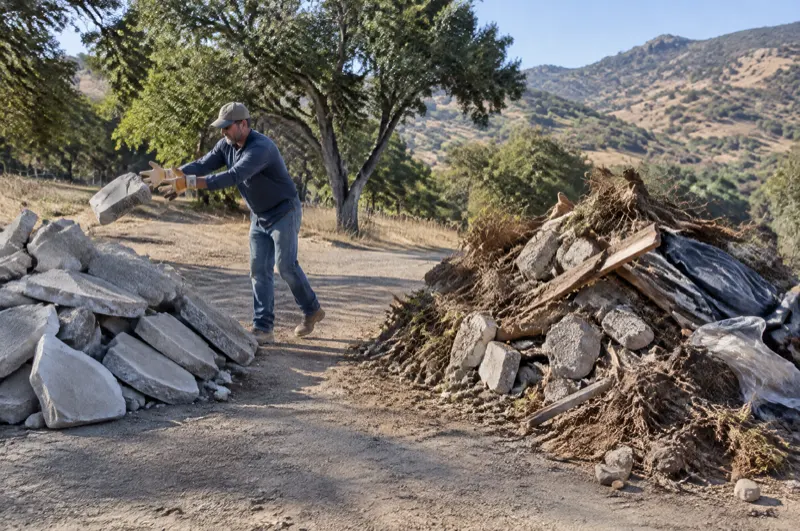
Clean concrete or mixed load? How to sort broken concrete before it's hauled
What keeps a concrete load clean, why rebar and dirt matter, and how to estimate the weight of a pile before you book a haul.
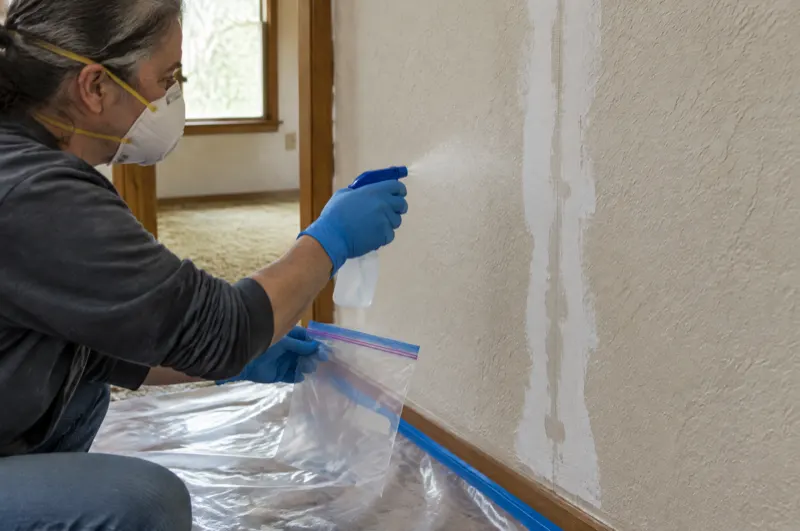
Old drywall and asbestos: when to test joint compound and ceiling texture before tear-out
What EPA says can contain asbestos in walls and ceilings, how San Diego and Riverside air rules treat homes, and a before-the-first-cut checklist.
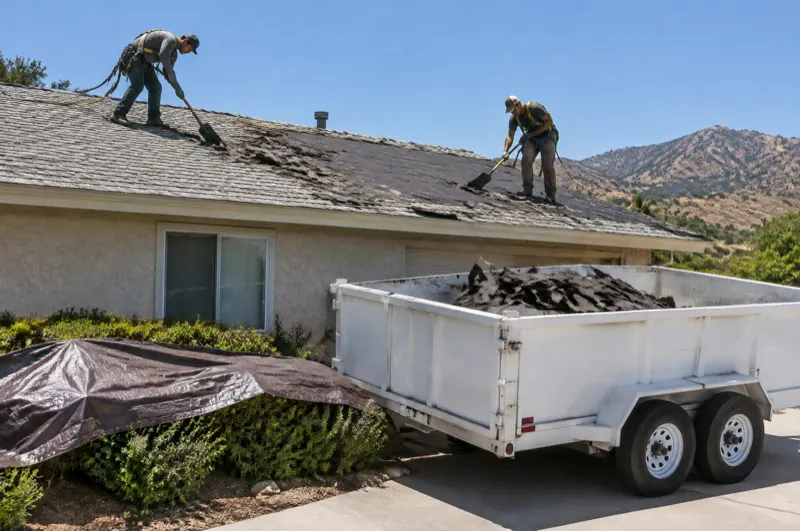
Roof tear-off debris: estimating the load by roofing square, layers and shingle type
Per-square weights for three-tab, laminate and premium shingles, a worked table for common roof sizes, and what happens to tear-off in California.
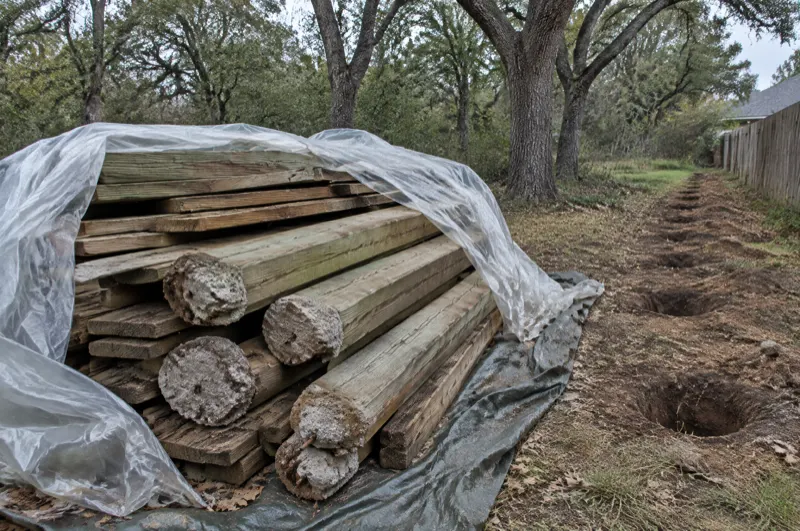
Treated or clean? Sorting old deck, fence and framing lumber under California's treated wood rules
California's treated wood waste rules in plain terms, the local landfills authorized to take it, and a sorting table for decks, fences and framing.
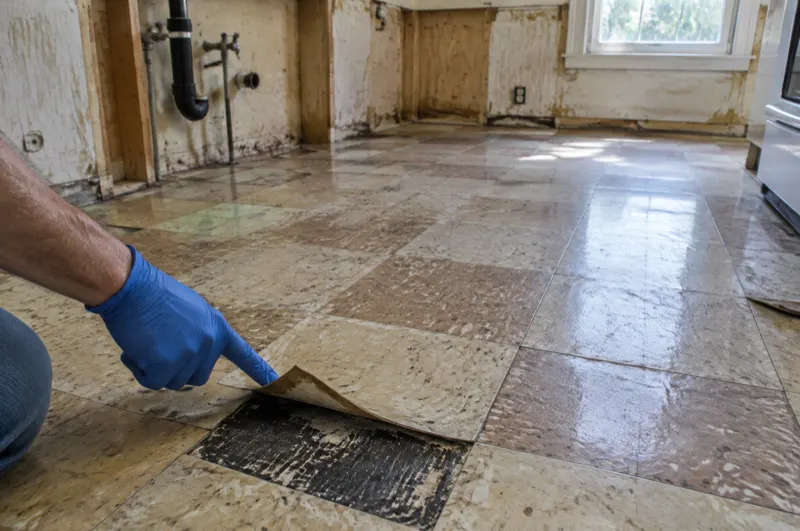
Pulling up old flooring? Which layers to test and how to sort carpet, tile, vinyl and wood for haul-away
A layer-by-layer table for older floors, when to sample before removal, and a sorting plan for carpet, tile, vinyl, laminate and wood.
Questions people ask before they call
How fast can you come out?
It depends on the week's schedule and how far you are from our route. Call (951) 720-3745 and we'll give you the next open time. Our phones are answered Mon–Fri 8–6 · Sat 9–4.
Do I need to move the debris to the driveway?
No. The crew loads from wherever the debris is, including backyards, garages and inside the house. Long carries and stairs add time, so mention them.
Do you take one material, or mixed loads?
Both. Mixed remodel debris is the most common job. Single-material loads like concrete or shingles are priced mostly by weight.
What can't you take?
Paint, solvents and other household hazardous waste, batteries and fuel tanks, and any material that tested positive for asbestos. If you're unsure about something, ask before we load.
Got a pile? Get it priced.
Tell us what the material is, roughly how much there is, and where it sits. A few photos sent by text usually get you a price range on the first call.
- What it is: concrete, drywall, shingles, lumber, flooring or a mix
- How much: a pickup load, a few loads, a room's worth
- Where it sits: driveway, backyard, inside, upstairs
- Gate codes, steep driveways or tight streets we should know about
- Monday–Friday8 AM–6 PM
- Saturday9 AM–4 PM
- SundayClosed