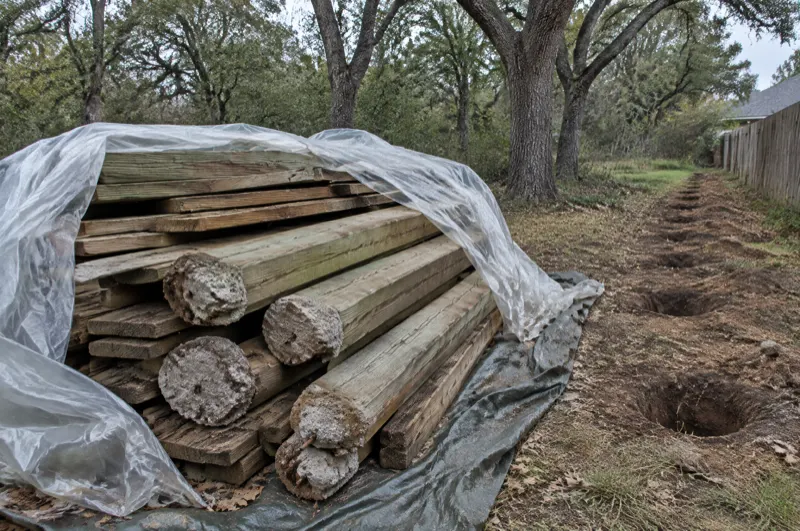
Separate treated wood (fence posts, deck framing, sill plates, landscape timbers) from clean framing and offcuts. In California, treated wood waste can't be burned, chipped or reused as mulch, and it has to go to a landfill authorized for it. Clean wood has recycling and reuse options.
What California calls treated wood waste
Under California Health and Safety Code section 25230.1, treated wood is wood treated with a registered chemical preservative to protect it from insects, fungi and decay (HSC 25230, via WWPI 2025 report). Riverside County's examples include fence posts, sill plates, landscape timbers, pilings, guardrails, decking and grape stakes (Riverside County).
How to tell treated from clean lumber
Riverside County's guidance points to end tags, stamps, perimeter staining and discoloration as signs of treatment (Riverside County). Older treated wood often has a green or brown tint, and posts that sat in the ground are almost always treated. When you can't tell, handle it as treated.
| Item | Likely treated? | How to check | Pile |
|---|---|---|---|
| Fence posts, especially in-ground | Yes | Green/brown tint, tag or stamp | Treated |
| Deck joists, beams and posts | Yes | End tags, staining at cut ends | Treated |
| Deck boards | Often | Tint; composite boards are a separate material | Treated unless confirmed |
| Sill plates on a slab | Yes | Usually stamped | Treated |
| Interior framing studs and offcuts | Rarely | Plain, pale wood | Clean |
| Pallets and crates | Rarely | Heat-treat stamps are not chemical treatment | Clean |
| Painted trim from a pre-1978 home | Not TWW | May carry lead paint | Ask first |
What you can't do with it
Treated wood waste managed under California's alternative standards can't be burned, scavenged, chipped for mulch, stored in contact with the ground, or recycled except as the law allows. Once separated, it shouldn't be mixed back in with other waste before disposal (HSC 25230.4). Burning old fence boards in a fire pit or chipping deck framing for garden paths are both out.
Where it can go
When disposed of on land, treated wood waste goes to a Class I hazardous waste landfill or to the composite-lined portion of a solid waste landfill approved for it, or to an authorized transfer facility that sends it there (twwdisposal.org).
The State Water Board's list of landfills authorized to accept it includes Otay and Sycamore in San Diego County and Badlands, El Sobrante and Lamb Canyon in Riverside County (list page updated March 29, 2023) (State Water Board).
Riverside County asks customers to declare treated wood at the scale house, keep it separate from all other waste (or the whole load is billed at its Hard-to-Handle rate), complete a bill of lading, and call ahead at (951) 486-3200 to confirm same-day acceptance (Riverside County).
Clean lumber has better options
Clean, untreated wood can go to organics facilities on San Diego County's list, including Agromin in Fallbrook, JMD Composting in Valley Center, San Pasqual Valley Soils in Escondido and El Corazon in Oceanside. Usable boards and building materials can go to salvage outlets such as Habitat for Humanity's Escondido and Carlsbad locations or to The ReUse People (County C&D facility guide).
Households and contractors
Industry guidance on the alternative standards says households are exempt from labeling and storage requirements if they store treated wood waste no more than 30 days and take it themselves to an approved facility. Contractors and haulers have storage, labeling, transport and recordkeeping duties (twwdisposal.org). Check the current guidance before you rely on the household exemption.
Is the law changing?
AB 332, signed August 31, 2021, put the treated wood waste standards into the Health and Safety Code. They stay in effect unless DTSC notifies the Legislature by July 1, 2028 that it's ready to replace them, in which case they'd be repealed January 1, 2030 unless extended. No 2025 or 2026 amendment turned up in our research (WWPI 2025 report).
Before pickup
- Make two piles: treated and clean.
- Leave end tags on boards that have them.
- Keep treated wood off bare ground; a tarp is enough.
- Bend over or pull exposed nails.
- Note posts with concrete footings attached; they add weight.
Sources
- WWPI 2025 Treated Wood Waste Report (HSC 25230 text and AB 332 status): definition, prohibitions, law status
- twwdisposal.org, authorized disposal sites: landfill and transfer options
- twwdisposal.org, contractors: household and contractor duties (industry guidance)
- State Water Board, landfills authorized for treated wood waste: Otay, Sycamore, Badlands, El Sobrante, Lamb Canyon
- Riverside County, treated wood waste: examples, identification, scale-house rules
- County of San Diego, C&D facility quick guide: clean wood and salvage outlets
Rules and facility policies change. These links were checked on October 28, 2026; confirm with the agency or facility before you rely on them.