Concrete removal for patios, walkways and broken slab
We break up small slabs, load the pieces by hand and take clean concrete to a recycler. Already-broken piles are the quickest jobs.
Common concrete jobs
- Cracked backyard patios and walkways
- Small pads for sheds, spas and AC units
- Piles left after a contractor breaks a slab
- Old footings, steps and block walls
- Concrete mixed with brick or pavers
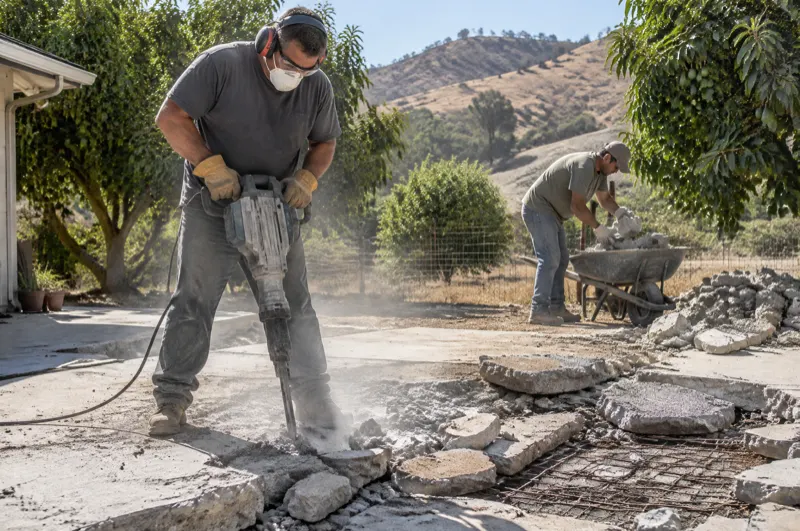
What a concrete removal job looks like
Concrete is the heaviest thing most people ask us to haul. Normal-weight concrete runs about 145 to 150 pounds per cubic foot (FHWA), so a 10 by 10 foot patio poured 4 inches thick comes to close to 5,000 pounds before you count the base rock under it.
Weight sets the job, more than volume. A small pile of slab pieces can fill a truck's weight limit while leaving most of its bed empty, so we ask about thickness, wire mesh or rebar, and whether the concrete is already broken.
For slabs that still need breaking, tell us the size, thickness and what's underneath. Small patios and walkways are a good fit for our crew. A full driveway or a structural slab may be a job for a demolition contractor with heavier equipment, and we'll say so on the call.
What's in and out of scope
Included
- Patio, walkway and small pad removal
- Hauling concrete you've already broken up
- Footings, steps and low block walls
- Brick, pavers and cinder block in the same load
- Rebar and wire mesh cut out of the pieces
Not in our loads
- Large driveways and structural slabs (we'll refer you)
- Concrete mixed with heavy soil or large rock unless discussed
- Asbestos-cement pipe or siding
- Grading or pouring new concrete
How the job runs
Send size and photos
Length, width, thickness, and a photo with a tape measure or a shoe for scale.
Price by weight and labor
Broken pieces cost less than a slab we still need to break.
Break and load
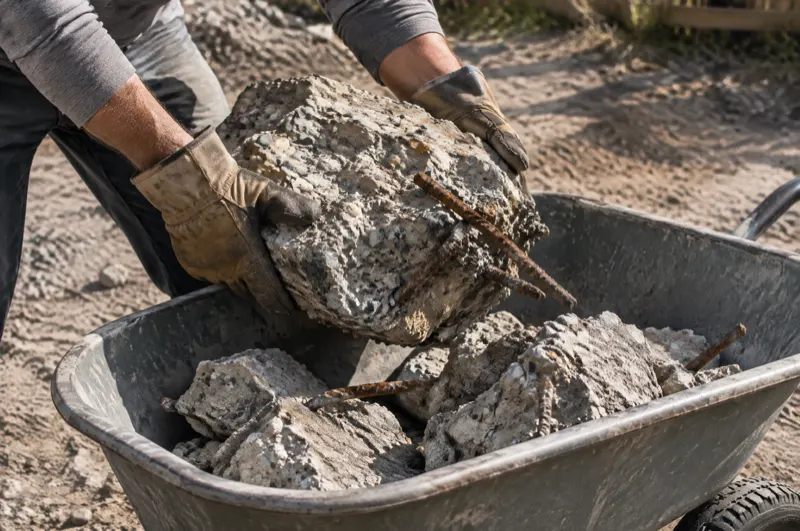
The slab is broken into pieces two people can lift, and loaded by hand or wheelbarrow.
To the recycler
Clean concrete goes to an aggregate recycler where accepted; mixed loads go to a disposal site.
Before the crew arrives
Mark sprinkler lines, irrigation valves and any utility lines that run under or beside the slab. If any digging below the slab is planned, call 811 first to have buried utilities marked.
Move pots, furniture and vehicles away from the slab and the path to the truck. If the truck can't reach within a reasonable wheelbarrow distance, tell us so we can plan the carry.
Keep the pile clean if you're breaking it yourself. Concrete without dirt, wood or trash is cheaper to recycle than a mixed pile.
What changes the price
- Square footage and thicknessThe two numbers that tell us the weight. A 6-inch slab is half again heavier than a 4-inch slab of the same size.
- Broken or wholeBreaking a slab takes hours of labor; loading broken pieces does not.
- ReinforcementRebar and wire mesh slow down breaking and must be cut free.
- Distance to the truckEvery wheelbarrow trip across a yard adds time.
Where we work
We take concrete removal jobs in Pala and nearby towns along SR-76 and I-15, including Rainbow, Pauma Valley, Fallbrook, Bonsall. See the full service-area list.
Concrete Removal questions
How much concrete fits in one load?
Weight runs out before space does. At roughly 145 to 150 pounds per cubic foot, a few cubic yards of broken slab can reach a truck's safe payload, so we price concrete by its size and thickness rather than by how full the truck looks.
Do you remove concrete with rebar in it?
Yes. Rebar and wire mesh add breaking time and are cut out of the pieces. Mention it on the call.
Can you take concrete mixed with dirt?
Small amounts of dirt on the pieces are fine. Loads that are mostly soil or rock are priced differently because many recyclers want clean concrete; ask before you mix them.
Do I need a permit to remove a patio?
Removing a backyard patio usually doesn't need a building permit, but rules differ by city and county, and work tied to a larger remodel may fall under a permit. Check with your city or the County of San Diego if you're unsure.
Got a pile? Get it priced.
Tell us what the material is, roughly how much there is, and where it sits. A few photos sent by text usually get you a price range on the first call.
- What it is: concrete, drywall, shingles, lumber, flooring or a mix
- How much: a pickup load, a few loads, a room's worth
- Where it sits: driveway, backyard, inside, upstairs
- Gate codes, steep driveways or tight streets we should know about
- Monday–Friday8 AM–6 PM
- Saturday9 AM–4 PM
- SundayClosed