Drywall removal and haul-away
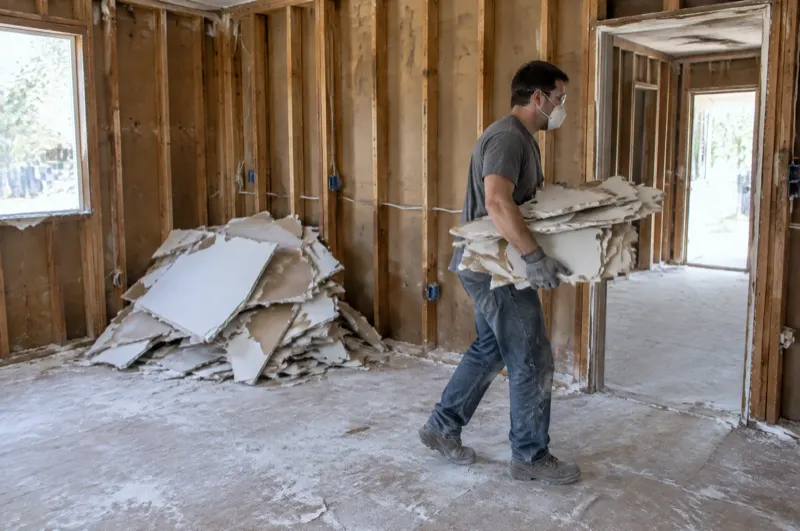
Torn-out board, offcuts from a new build and bagged sanding dust, carried out of the house by our crew and hauled the same visit.
Drywall we haul
- Water-damaged board pulled after a leak
- Walls and ceilings opened for a remodel
- Scraps and offcuts from new construction
- Bagged sanding dust and corner bead
- Plaster and lath from older rooms
Where drywall jobs come from
Leaks are the most common reason. Once a plumber or restoration company has cut out wet board, the pieces sit in the garage or on the patio until someone hauls them. Remodels are next: opening a wall for a kitchen, removing a closet, or taking out a popcorn ceiling.
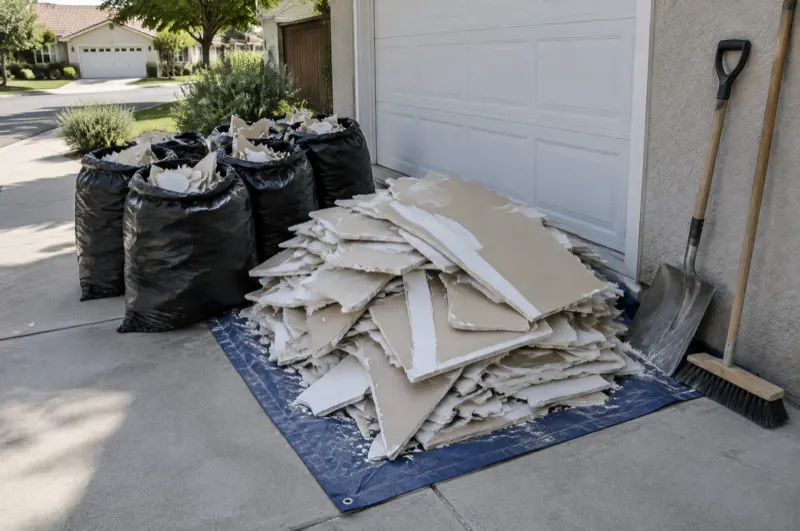
Drywall is bulky and breaks into chalky pieces that shed dust in a car or truck bed. Bagging small pieces in heavy contractor bags keeps the mess down and speeds loading, but it isn't required.
New construction makes a different kind of drywall debris: clean offcuts in large pieces. Clean scrap is easier to handle and can sometimes go to a gypsum recycler instead of a landfill.
What's in and out of scope
Included
- Drywall pieces from walls and ceilings
- Clean scrap and offcuts from new work
- Bagged dust and broken bits
- Corner bead, tape and screws mixed in
- Plaster and wood lath
Not in our loads
- Board or joint compound that tested positive for asbestos
- Moldy material still in place behind walls (call a remediation company first)
- Paint, mud buckets with wet compound and solvents
How the job runs
Tell us how much
A rough count of sheets or a photo of the pile is enough.
Mention the house's age
Older joint compound and textured ceilings can contain asbestos; see the note below.
Carried out and loaded
The crew carries bags and pieces from the room to the truck and protects floors along the path.
Hauled
Clean scrap goes to recycling where a facility accepts it; the rest goes to a permitted disposal site.
Getting the room ready
Bag what you can. Heavy 3-mil or thicker contractor bags hold broken pieces and dust without splitting. Don't overfill: a full bag of drywall is heavier than it looks.
Clear a path from the room to the front door, and let us know about stairs. If the drywall is still on the walls, tell us whether you want us to pull it or whether it's already down.
What changes the price
- VolumeDrywall is light for its bulk; volume usually decides the price.
- Stairs and carry distanceSecond-floor rooms and long hallways add carrying time.
- Bagged or looseLoose crumbs and dust take longer to load than bagged or whole pieces.
- Testing statusWe need to know whether older material has been tested before we handle it.
Older drywall and asbestos
Joint compound, textured walls and popcorn ceilings made before the 1980s can contain asbestos. Asbestos fibers are a health risk when the material is broken or sanded (EPA).
San Diego County's asbestos rule, APCD Rule 1206, requires a survey before renovation or demolition of most commercial and larger residential buildings; single homes and buildings with four or fewer units are generally exempt (SDAPCD Rule 1206). The EPA still advises having suspect material sampled by a trained professional before a remodel disturbs it, and treating it as asbestos until you know (EPA).
We haul drywall that's been tested and cleared, and new-construction scrap. We don't remove or haul material that tested positive for asbestos; that work goes to a licensed abatement contractor.
Where we work
We take drywall removal jobs in Pala and nearby towns along SR-76 and I-15, including Rainbow, Pauma Valley, Fallbrook, Bonsall. See the full service-area list.
Drywall Removal questions
Can you take wet or water-damaged drywall?
Yes. Wet board is heavier, so tell us if it's still damp. If there's visible mold growth, the source should be dealt with first.
Do you tear out drywall or only haul it?
Both, depending on the job. Hauling already-removed board is the most common request. If you want walls opened, describe the rooms and we'll talk through it on the call.
Does drywall need to be bagged?
No, but bagging small pieces keeps dust down and makes loading faster. Large sheets can go loose.
Is old drywall dangerous?
Not when it's left alone. Joint compound and textures from before the 1980s can contain asbestos, which is a hazard when the material is broken or sanded. Testing is the only way to know.
Got a pile? Get it priced.
Tell us what the material is, roughly how much there is, and where it sits. A few photos sent by text usually get you a price range on the first call.
- What it is: concrete, drywall, shingles, lumber, flooring or a mix
- How much: a pickup load, a few loads, a room's worth
- Where it sits: driveway, backyard, inside, upstairs
- Gate codes, steep driveways or tight streets we should know about
- Monday–Friday8 AM–6 PM
- Saturday9 AM–4 PM
- SundayClosed